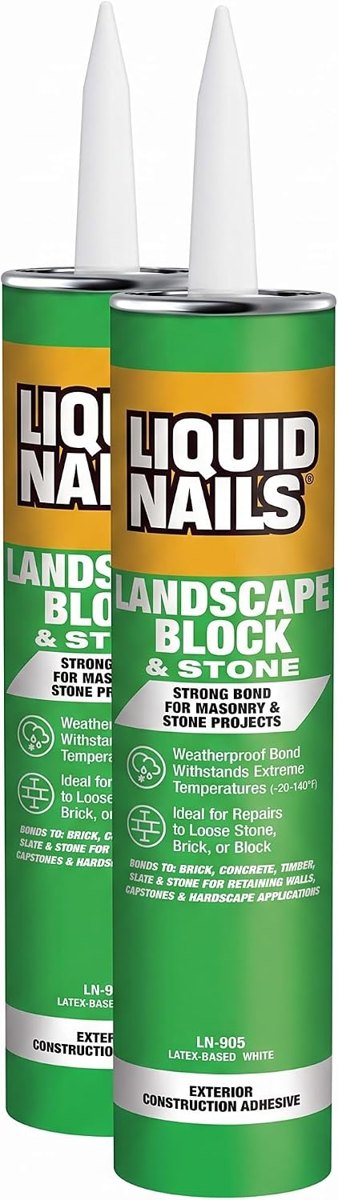

Landscape block adhesive for wall caps and steps
Gravity and interlock hold the body of a retaining wall. The caps, the step treads and the top course have nothing on top of them, so they walk off in a few winters unless they are glued. Landscape Block is the bead for that.
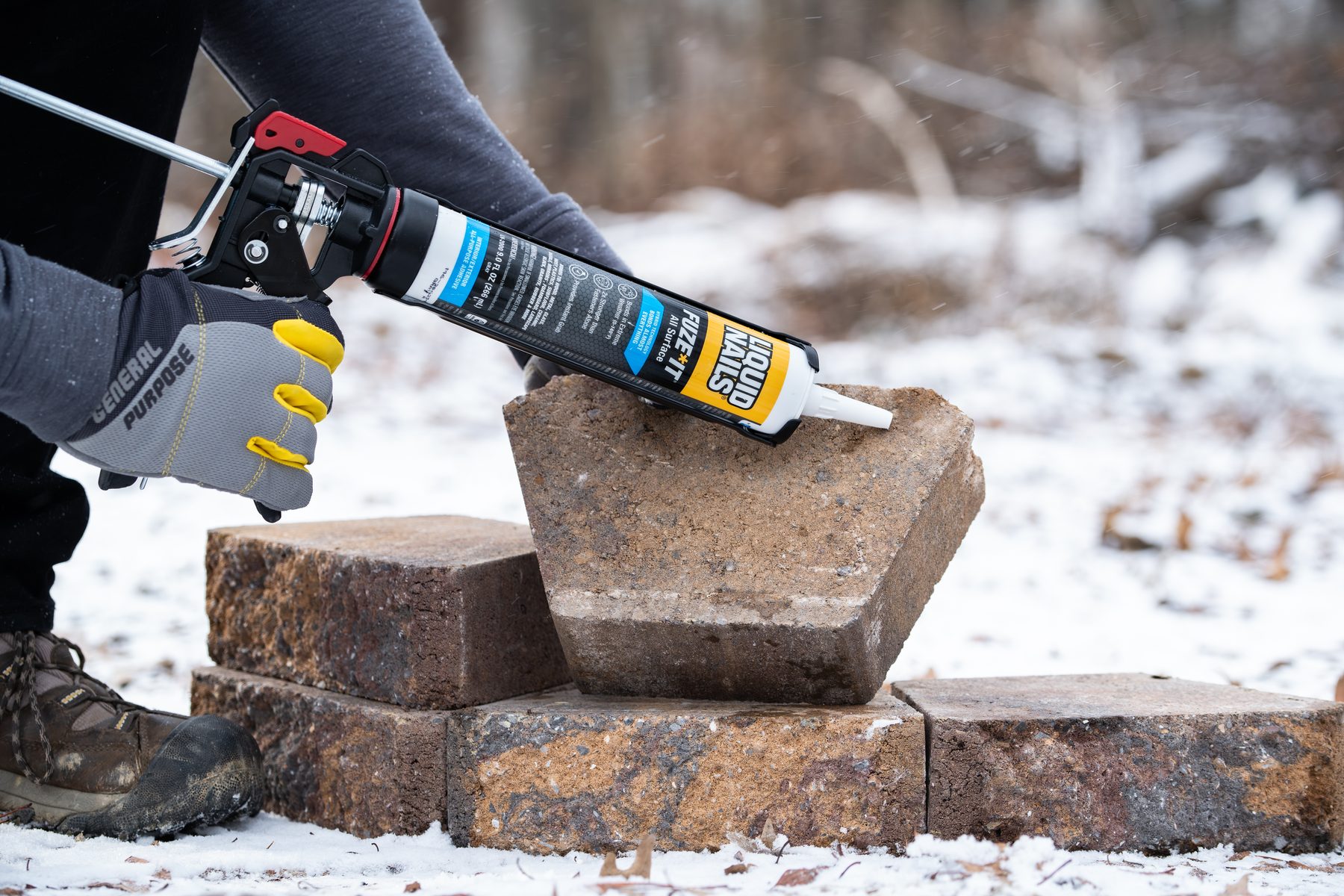
Where adhesive goes on a block wall
- Caps on the top course of a retaining or garden wall.
- Step treads on block or stone risers.
- The top one or two courses of a wall under 2 ft that has no pins or lips.
- Column caps, mailbox posts, edging stones that mowers knock loose.
Not the whole wall: lower courses need to drain and move; the interlock holds them.
Surface prep
Brush the top of the block clean of sand, dust and efflorescence; the adhesive bonds to the block, not to the dust on it. The block should be dry to the touch and above 40 degrees F. In winter, set the caps on a dry afternoon and keep the cartridges warm until they go in the gun.
Bead pattern
Two parallel 1/4 in. beads along the length of the block, an inch in from each edge, so the cap is supported front and back and water cannot pool in a closed ring. On a stair tread, add a short bead across the back. Set the cap within 10 minutes, press and wiggle it to spread the bead, and leave it alone for 24 hours. Full cure is 7 days, and the bond is weather resistant through freeze and thaw.
Repairing a loose block or stone
Lift the loose piece, scrape old mortar or adhesive off both faces, brush, and set it in two fresh beads of Landscape Block. For a crack in the block itself, or a mortar joint that has opened, Concrete & Mortar Repair fills and seals it, paintable when dry.
Pavers and odd materials
Landscape Block bonds concrete block, natural stone, brick and pavers. For stone to metal (a cap on a steel post), or a mixed joint with glass or tile, use Fuze*It, which bonds nearly every material and cures in cold weather.